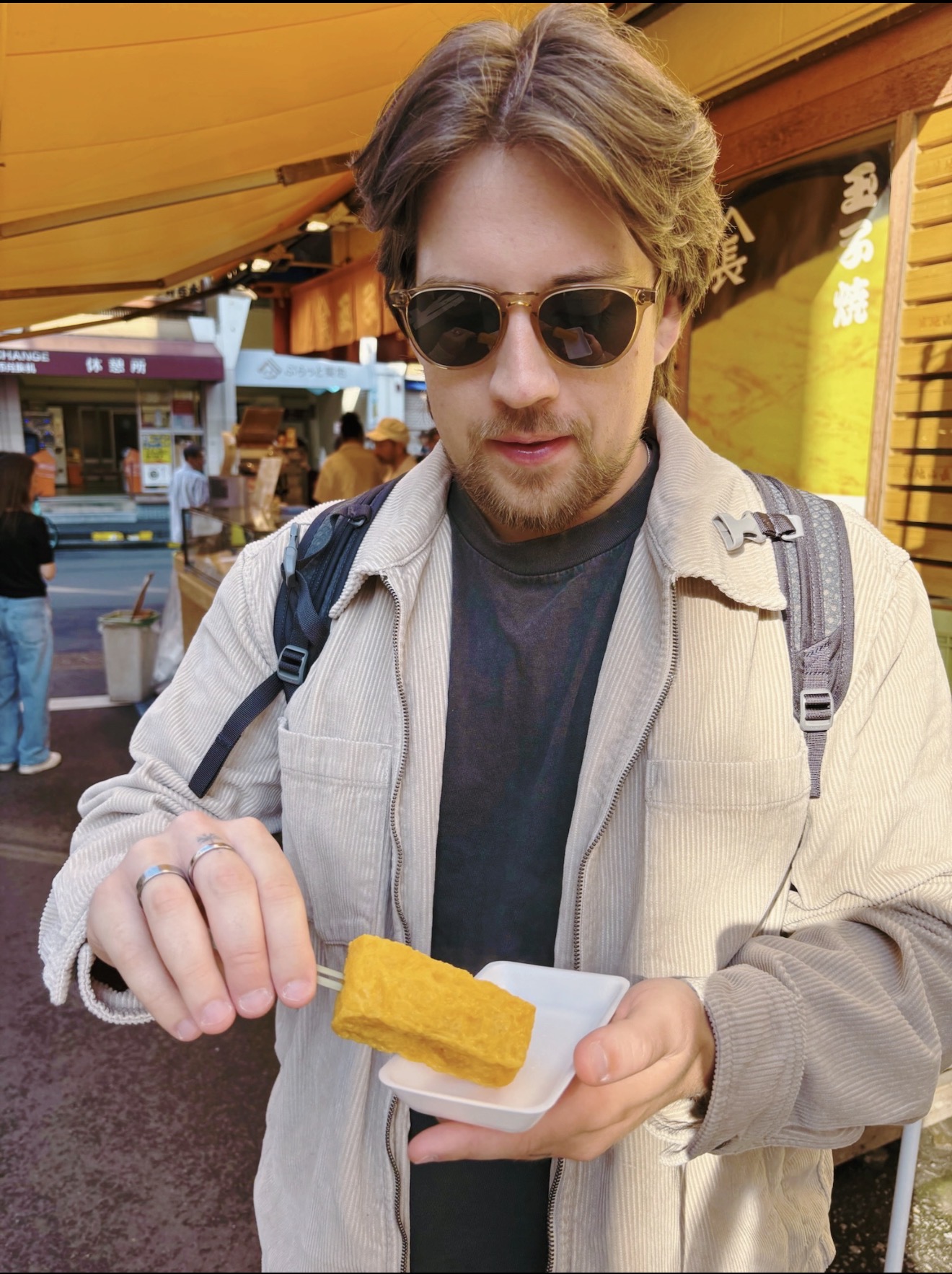
“I didn’t travel to Japan to find a technique. I went to understand what patience looks like when it’s applied to something sharp.”
— Drake, Founder
I didn’t plan to become a knife sharpener.
It started on a trip to Japan. I wasn’t there for knives specifically — I was there for the culture, the food, the discipline you feel in the air of every craftsman’s shop you walk past. But one afternoon in Kyoto, I stopped in front of a small knife sharpening stall in a covered market. The man behind the counter was probably seventy years old. He had a customer’s knife in his hand, and a stone in front of him, and he wasn’t looking at either one. He was feeling the angle through his fingers.
I stood there for twenty minutes watching him work. He didn’t rush. He didn’t check his phone. He moved through five different stones, each progressively finer, adjusting the pressure and angle with every pass in a way that looked like instinct but clearly wasn’t. When he finished, he ran his thumb across the edge and nodded once. Then he handed the knife back to the owner without a word.
That moment stayed with me.
When I came home to Atlanta, I started studying the technique seriously. I bought stones from Japan. I practiced on every knife in my kitchen until they all performed the way they were designed to. Then my neighbors started asking. Then a chef I knew. Then a restaurant. And eventually I realized: Atlanta needed this. Not a sharpening machine. Not a pull-through service. Someone who actually cared enough to learn the right way.
Premier Edge is the result of that trip — and every hour of practice since. Every knife I sharpen gets the same attention that old man in Kyoto gave to the blade in his hand. Because that’s what it deserves. Because that’s what you deserve, as the person who cooks with it.
The stones make the difference.
Japanese whetstones work through a progression of grits — coarse to remove damage and reset the bevel, medium to refine the edge, fine and ultra-fine to polish it to a mirror finish. The grit number matters. The pressure matters. The angle matters — and keeping it consistent across every pass on every stone is the skill that takes years to develop.
A honing rod doesn’t sharpen. A pull-through sharpener removes too much material and creates an inconsistent edge. A Japanese whetstone, used correctly, restores the exact geometry your knife was designed with. That’s not marketing language — it’s metallurgy.
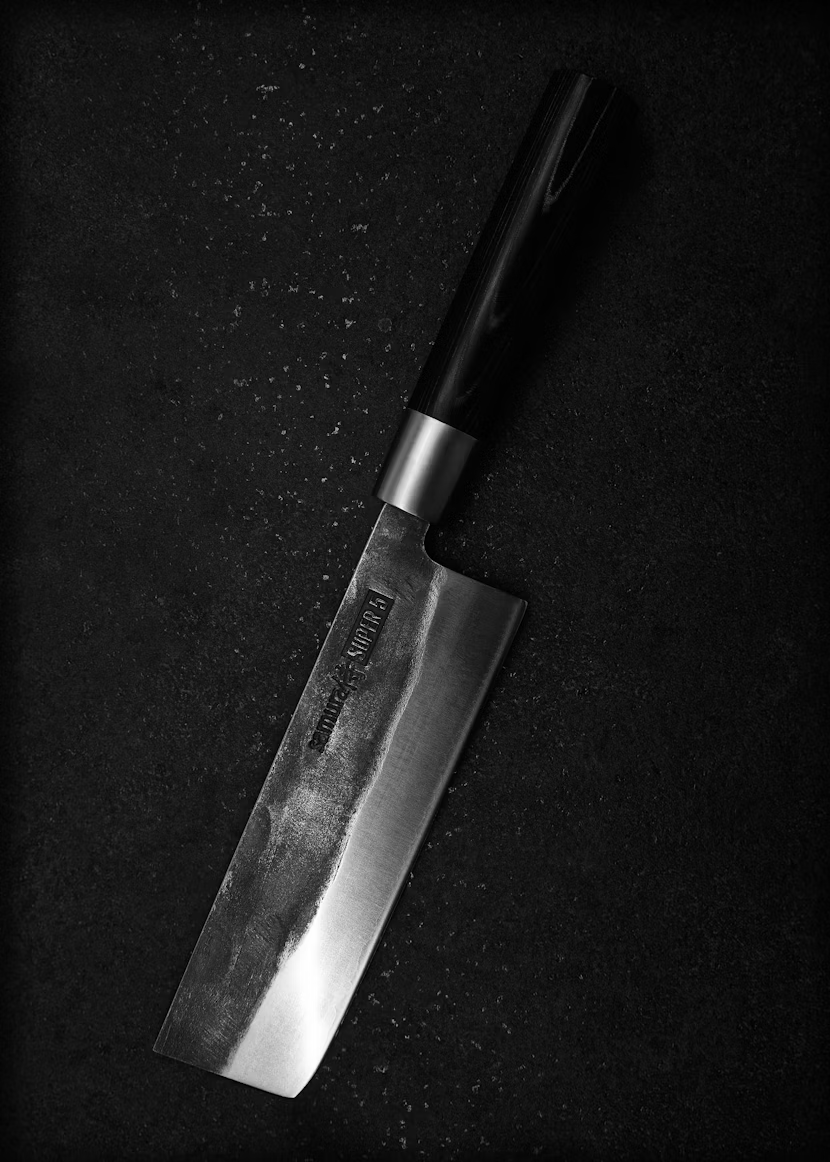
From home kitchens to professional lines.
I work with home cooks who want to fall in love with cooking again, professional chefs who can’t afford a subpar edge, and restaurants that need volume sharpening done right. The work is the same regardless. Patient. Precise. Personal.
If you have a knife worth cooking with, it’s worth sharpening properly. That’s the only qualification required.
Ready to experience the difference?
Every knife has a story. Let's help yours reach its full potential.
(770) 765-3697Or text us anytime at the same number.